Traditional Korean Soups and Stews Explained: Warmth, Memory, and Meaning in Every Spoon
Traditional Korean Soups and Stews Explained: Warmth, Memory, and Meaning in Every Spoon
On a cold winter evening in Seoul, I once found myself tucked into a tiny neighborhood restaurant, steam fogging the windows and the rhythmic bubbling of earthenware bowls filling the room with sound. The owner, an elderly woman with flour-dusted hands, gently set down a deep pot of soup in front of me and said something I’ll never forget: “In Korea, soup is not just food. It is care.” That moment stayed with me, because traditional Korean soups and stews are exactly that — nourishment for the body, comfort for the heart, and a living archive of Korean history and values.
Korean cuisine is often celebrated for its bold flavors and iconic dishes, but soups and stews quietly sit at its emotional center. From daily home meals to royal banquets and ancestral rites, these dishes reflect geography, seasons, beliefs, and family traditions passed down through generations. Understanding them means understanding Korea itself.
The Cultural Role of Soups and Stews in Korean Life
In Korean households, a meal without soup feels incomplete. The Korean table traditionally balances rice, side dishes, and a soup or stew that anchors the meal. Soups are believed to harmonize the body, aid digestion, and provide warmth, especially important in Korea’s long winters.
Historically, soups evolved from practical necessity. Farming communities relied on seasonal vegetables, fermented ingredients, and bones that could be simmered slowly to extract every bit of nourishment. Over time, these humble meals gained cultural importance. Scholars from the Korean Food Promotion Institute have documented how soups were central to ritual meals and family gatherings, reinforcing social bonds through shared warmth and nourishment.
Guk, Tang, and Jjigae: Understanding the Differences
Korean soups and stews fall into three main categories, each with its own purpose and personality. Guk is a lighter soup, often served daily and meant to complement rice. Tang is richer and more deeply simmered, frequently associated with health and recovery. Jjigae is thicker, bolder, and more intensely seasoned, usually cooked and served bubbling hot in a single pot.
These distinctions are not rigid rules but cultural guidelines shaped by tradition and taste. Korean culinary historian Cho Hee-sook explains that the classification reflects not only texture but also intention — whether the dish is meant to refresh, restore, or deeply satisfy.
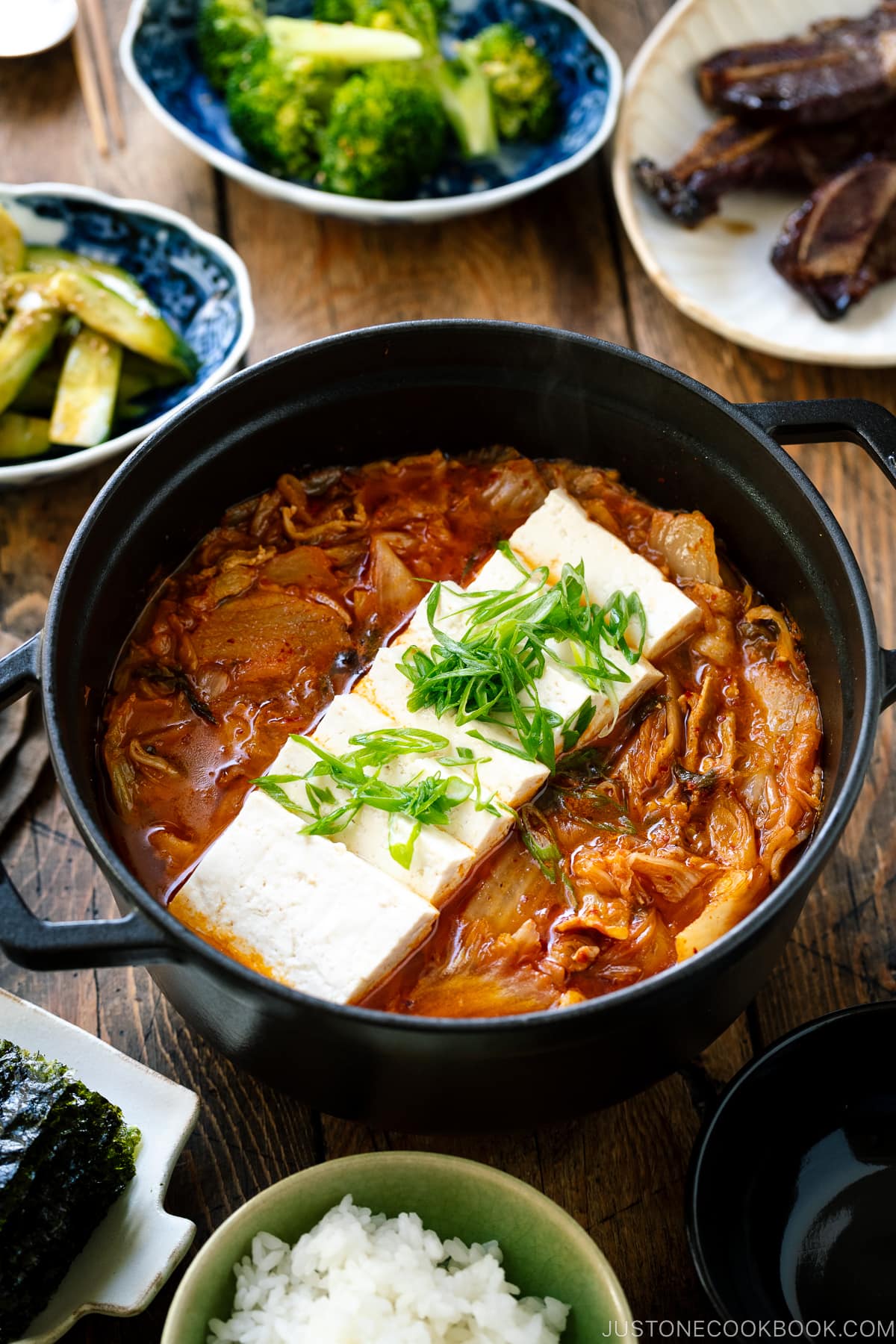
Kimchi Jjigae: Fermentation Turned Comfort Food

Kimchi jjigae is perhaps the most emotionally charged Korean stew. Made with aged fermented kimchi, pork, tofu, and anchovy-kelp broth, it transforms leftovers into something profoundly comforting. The longer kimchi ferments, the deeper and richer the stew becomes, which is why many Koreans say the best kimchi jjigae tastes like memory itself.
According to fermentation research published by the Journal of Ethnic Foods, aged kimchi contains enhanced probiotics and amino acids, contributing not only to flavor but also digestive health. Many home cooks swear by adding a spoon of kimchi brine for depth — a small trick that elevates the stew from good to unforgettable.
Doenjang Jjigae: The Flavor of Korean Soil
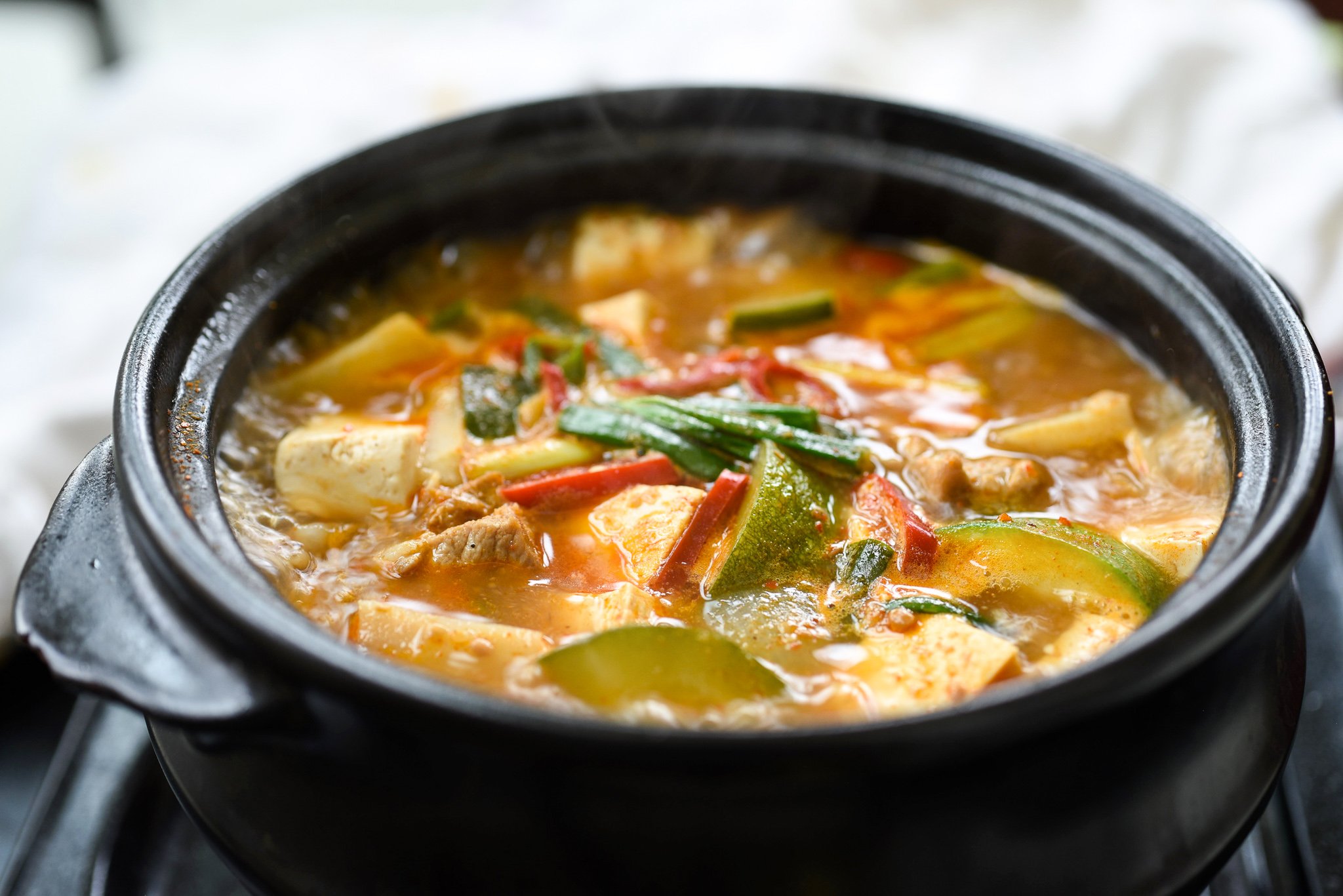
Doenjang jjigae is often described as the taste of home. Made from fermented soybean paste, vegetables, tofu, and sometimes seafood, this stew reflects Korea’s agricultural roots. Doenjang itself is traditionally fermented in earthen jars for months, sometimes years, developing complex umami notes that chefs around the world now admire.
Nutrition experts from Seoul National University have highlighted doenjang’s potential benefits, including gut health support and antioxidant properties. What makes this stew special is its adaptability. Every household has its own version, adjusted to seasonal produce and personal preference, making it a living recipe rather than a fixed formula.
Samgyetang: Healing Through Heat
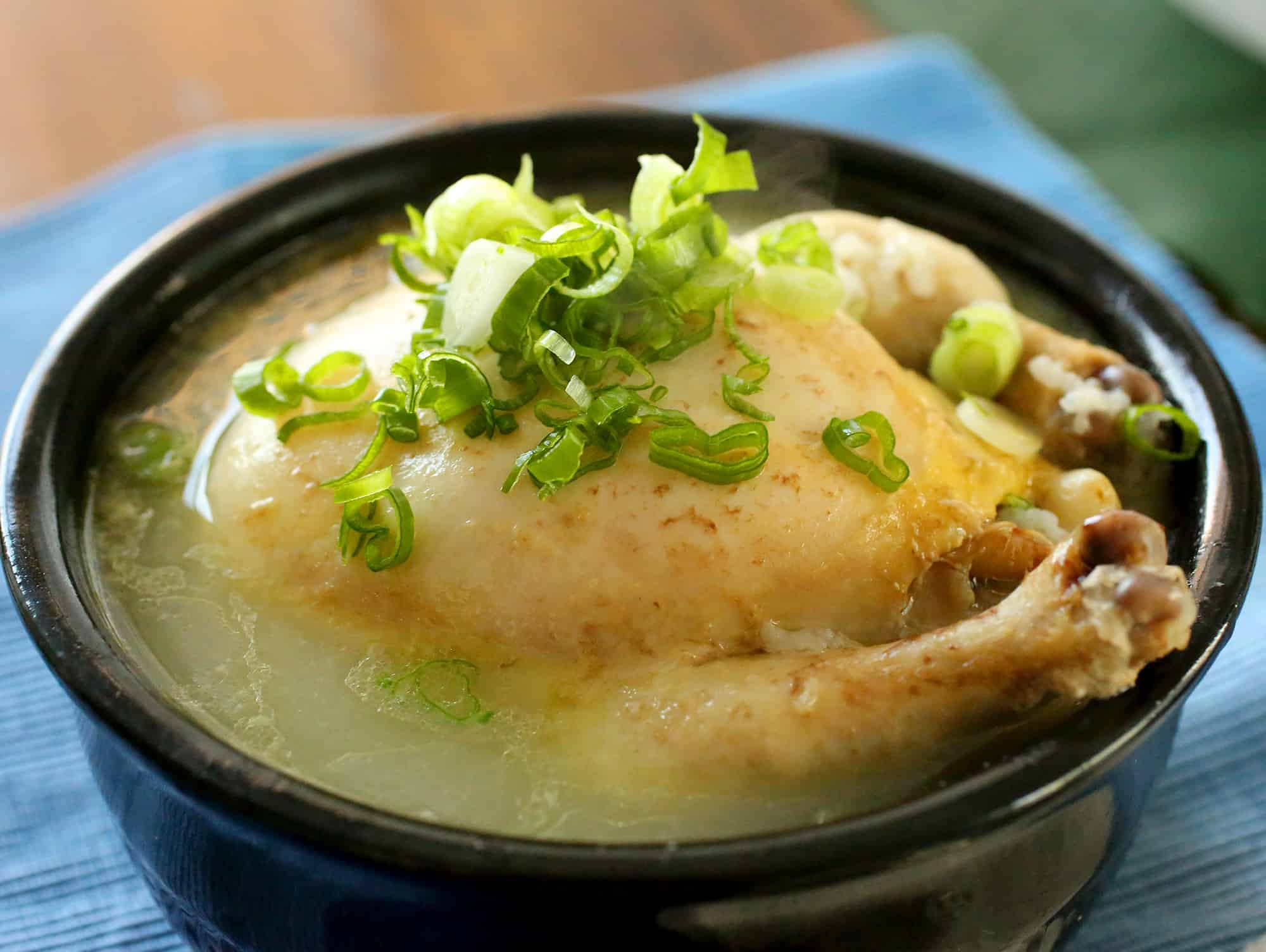
Samgyetang is traditionally eaten during the hottest days of summer, a practice rooted in the belief that fighting heat with heat restores balance. The soup features a young chicken stuffed with sticky rice, ginseng, jujubes, and garlic, simmered until the broth turns milky and rich.
The use of ginseng is deeply tied to Korean herbal medicine. Studies referenced by the National Center for Biotechnology Information discuss ginseng’s association with immune support and fatigue reduction. While modern science continues to explore these claims, many Koreans still turn to samgyetang when they feel physically depleted, trusting centuries of tradition.
Seolleongtang: Patience in a Bowl
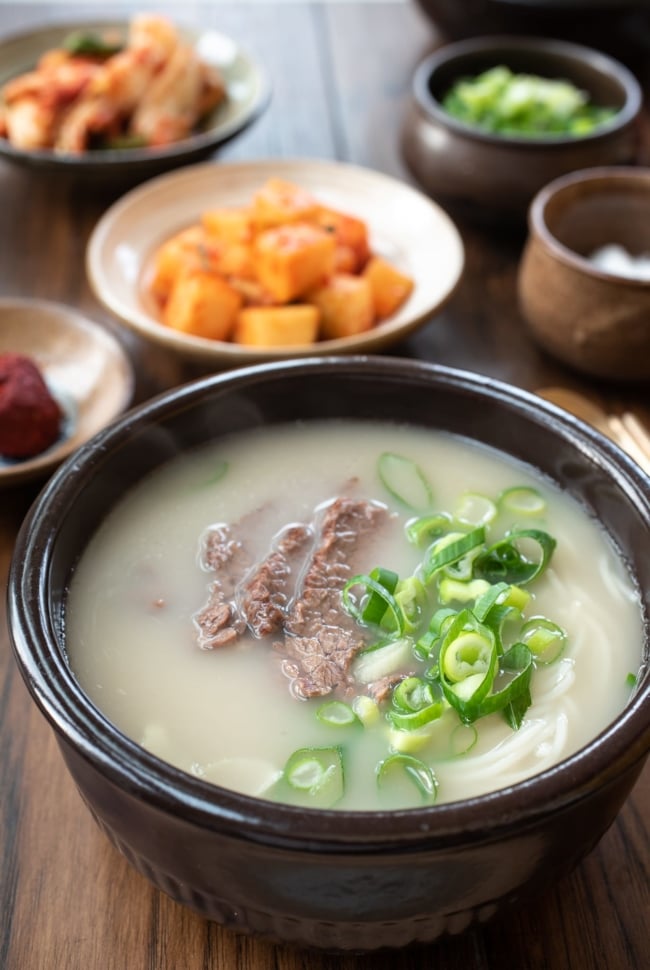
Seolleongtang is the embodiment of patience. Ox bones are simmered for hours, sometimes days, until the broth turns creamy white. The result is a subtle, clean-tasting soup that diners season themselves with salt, scallions, or pepper.
Food anthropologists often cite seolleongtang as an example of communal cooking, historically prepared in large quantities for families or villages. Bone broth research from Harvard Health Publishing notes its role in providing collagen and minerals, which may support joint and gut health when consumed as part of a balanced diet.
Yukgaejang: Spice, Strength, and Survival
Yukgaejang is a bold, spicy soup made with shredded beef, scallions, and chili oil. Historically associated with stamina and strength, it was once popular among farmers and laborers who needed sustained energy.
Its fiery red color comes not just from chili but from technique — carefully sautéing ingredients in oil before simmering them slowly. Culinary instructors from Le Cordon Bleu Seoul emphasize this step as essential for building depth rather than raw heat, a lesson that transforms the dish when cooked at home.
Royal and Temple Soups: Quiet Sophistication
Not all Korean soups are fiery or rustic. Royal court cuisine favored refined, delicately seasoned soups served in measured portions, while temple food focused on plant-based broths designed to calm the mind. Buddhist temple cuisine avoids strong aromatics like garlic, yet achieves remarkable depth through mushrooms, roots, and fermented sauces.
Institutions such as the Korean Temple Food Center have helped preserve these traditions, sharing recipes that reflect mindfulness and balance rather than indulgence.
Cooking Traditional Korean Soups at Home with Confidence
Cooking Korean soups at home is less about strict recipes and more about understanding principles. Start with a proper broth, often made from anchovies and kelp or bones simmered slowly. Respect fermentation by tasting before seasoning, as fermented ingredients continue to evolve during cooking. Use earthenware pots when possible, as they retain heat and enhance flavor development.
Many trusted Korean cooking resources, including Maangchi’s kitchen and academic publications from Yonsei University’s food science department, emphasize tasting and adjusting rather than rigid measurement. This approach builds intuition and confidence over time.
Frequently Asked Questions About Traditional Korean Soups and Stews
What is the difference between Korean soup and stew?
Korean soups are generally lighter and more broth-forward, while stews are thicker, bolder, and cooked longer with stronger seasoning. The distinction often reflects intention rather than strict rules.
Are Korean soups healthy for daily consumption?
Many traditional Korean soups are balanced and nutrient-rich, especially those based on vegetables, fermented ingredients, or bone broth. Moderation with sodium and mindful ingredient choices help maintain balance.
Can Korean soups be made vegetarian or vegan?
Yes, many soups can be adapted using vegetable broths, fermented soybean paste, mushrooms, and tofu. Temple cuisine offers excellent examples of deeply flavorful plant-based soups.
Why are fermented ingredients so common in Korean soups?
Fermentation enhances flavor, preserves food, and supports digestion. Ingredients like kimchi and doenjang add complexity that fresh ingredients alone cannot achieve.
Is it necessary to use special Korean cookware?
While not essential, traditional earthenware pots retain heat well and keep soups bubbling longer, enhancing both texture and experience.
How long do traditional Korean soups usually take to cook?
Cooking times vary widely. Some light soups take under an hour, while bone-based soups may simmer for many hours or even overnight.
Conclusion: A Living Tradition Worth Savoring
Traditional Korean soups and stews are far more than recipes. They are expressions of care, resilience, and shared history, shaped by climate, philosophy, and family life. Whether it’s the fiery comfort of kimchi jjigae, the grounding depth of doenjang jjigae, or the restorative warmth of samgyetang, each bowl tells a story that has been simmering for centuries.
For anyone exploring Korean cuisine, soups and stews offer the most honest entry point. Start with one dish, cook slowly, taste often, and allow the process to teach you. In doing so, you won’t just learn how Koreans eat — you’ll understand how they remember, heal, and connect. And once that understanding settles in, every spoonful feels like coming home.


Comments
Post a Comment