Authentic Korean Main Course Recipes Explained: A Journey Into Korea’s Heart Through Food
Authentic Korean Main Course Recipes Explained: A Journey Into Korea’s Heart Through Food
The first time I tasted an authentic Korean home-cooked meal, it wasn’t in a restaurant or a trendy food street. It was in a small family kitchen, where the air carried the aroma of simmering broth, fermented chili paste, and toasted sesame oil. That meal taught me something powerful: Korean main courses are not just recipes. They are stories, rituals, and living traditions passed down through generations.
In this guide, we explore authentic Korean main course recipes in a way that goes beyond instructions. You’ll understand why certain ingredients matter, how techniques shape flavor, and what cultural values sit quietly beneath every bowl of rice and stew. Whether you are a curious home cook or someone who wants to truly understand Korean cuisine, this deep dive will give you clarity, confidence, and inspiration.
What Makes a Korean Main Course Truly Authentic
Authenticity in Korean cooking isn’t about complexity or expensive ingredients. It’s about balance, patience, and respect for tradition. A Korean main course usually revolves around rice, complemented by a hearty dish that provides protein, warmth, and comfort. These meals are designed to nourish the body and maintain harmony, a concept rooted in traditional Korean philosophy.
Key to authenticity is the use of time-honored ingredients such as fermented soybean paste, red chili paste, garlic, scallions, sesame oil, and naturally brewed soy sauce. According to culinary historians at the Korean Food Promotion Institute, fermentation is the backbone of Korean flavor, creating depth that cannot be rushed or replicated with shortcuts.
Another defining feature is method. Slow simmering, careful marination, and controlled heat are essential. Korean cooks often say that food absorbs emotion, which is why traditional meals are prepared with calm focus and intention.
Bulgogi: Sweet, Savory, and Deeply Personal
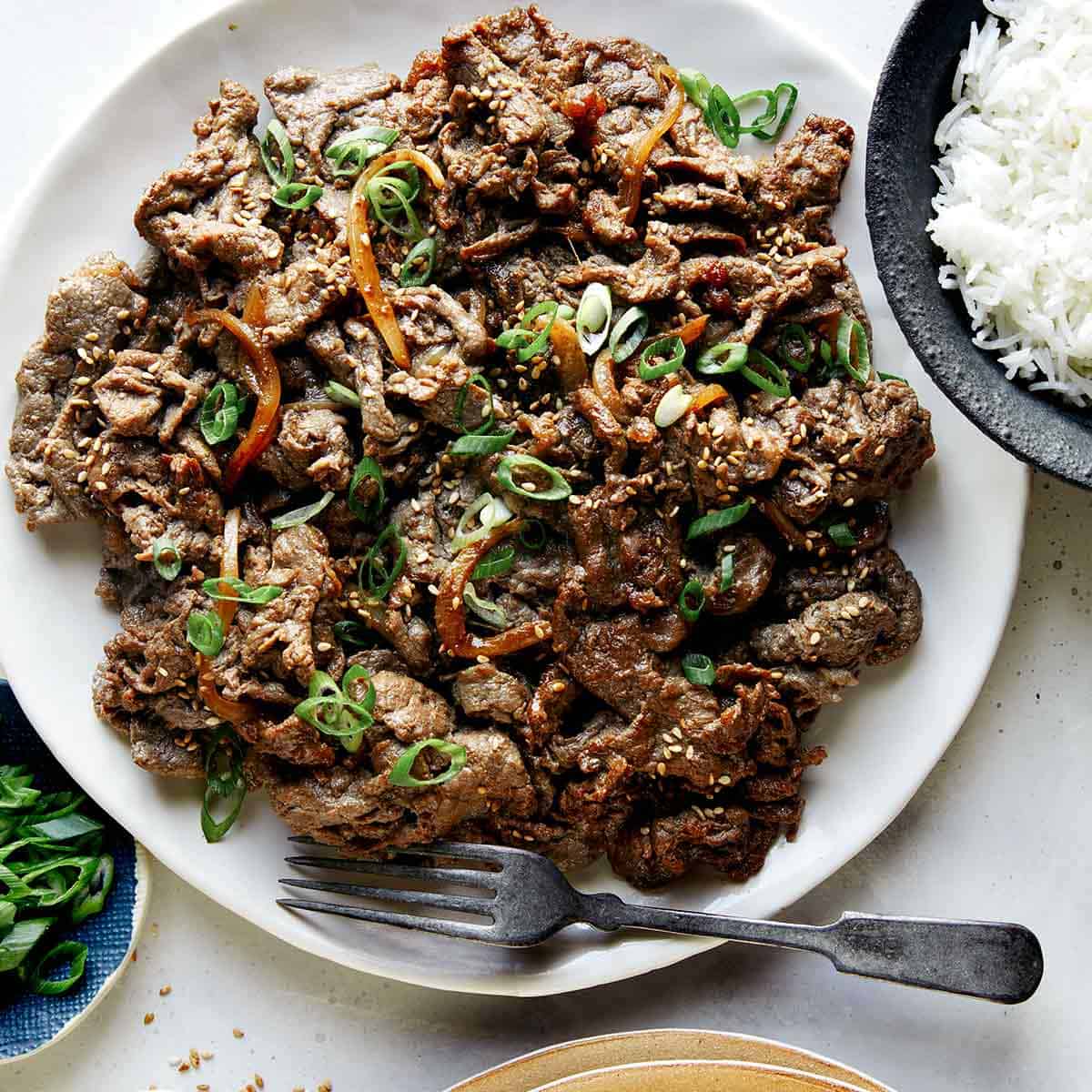
Bulgogi is often the first Korean main dish people fall in love with, and for good reason. Thinly sliced beef is marinated in a mixture of soy sauce, pear or apple puree, garlic, sesame oil, and sugar, then cooked quickly over high heat. The result is tender meat with a caramelized exterior and a juicy interior.
What makes authentic bulgogi special is the fruit. Traditional recipes rely on Korean pear to tenderize the meat naturally. Serious Eats has documented how enzymes in pear break down muscle fibers more gently than vinegar or artificial tenderizers, preserving the meat’s texture.
In Korean homes, bulgogi is more than a dish. It’s often reserved for celebrations, family gatherings, or moments when comfort is needed. Served with warm rice and simple vegetable sides, it represents generosity and care.
Kimchi Jjigae: The Soul of Korean Home Cooking
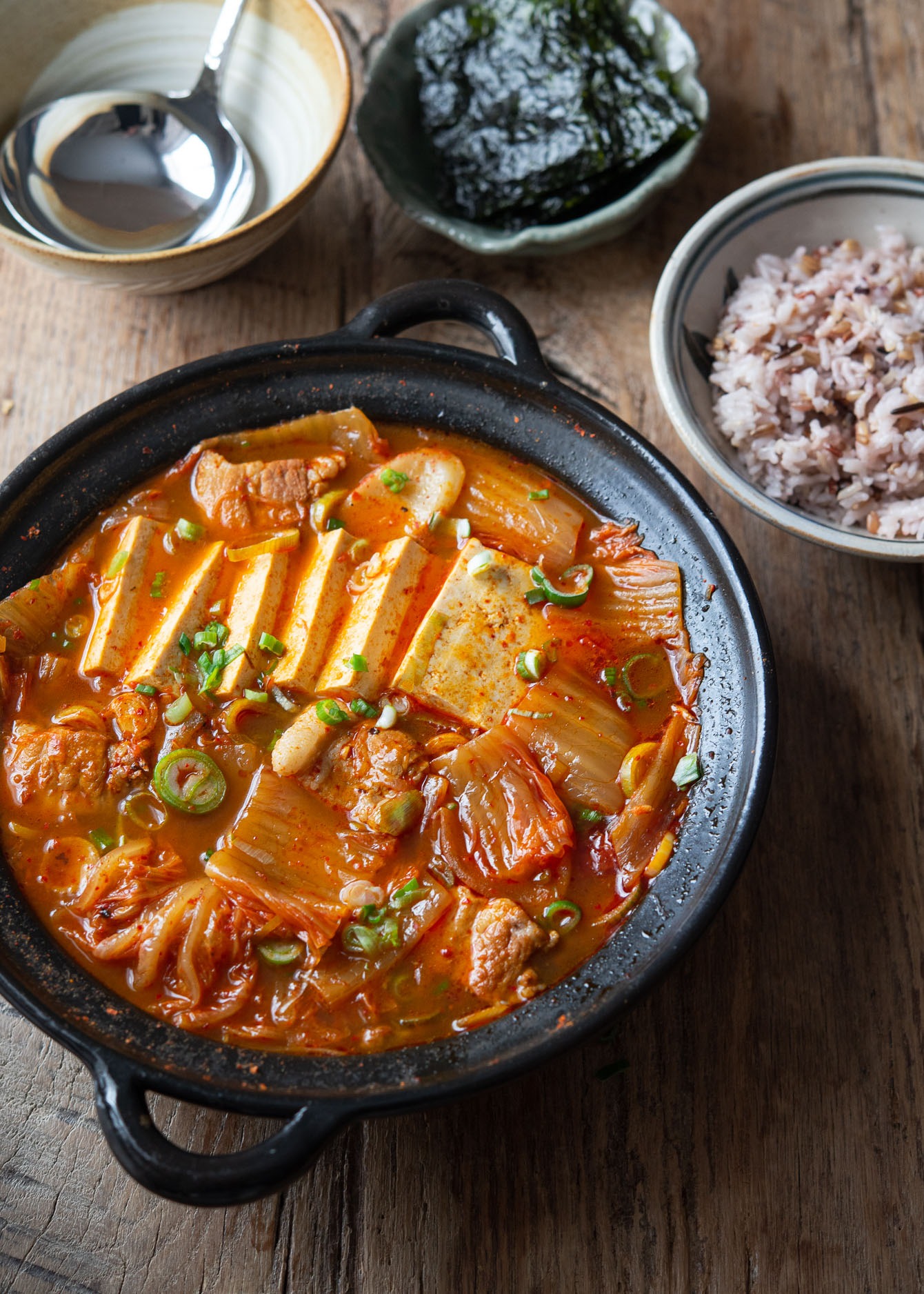
Kimchi jjigae is not fancy, but it is deeply loved. This spicy stew is built around well-fermented kimchi, pork or tofu, and anchovy-kelp broth. The older the kimchi, the better the stew. This isn’t a flaw; it’s a feature.
Food scholars from Maangchi’s Korean cooking archive explain that aged kimchi develops complex lactic acid bacteria, which enhances umami when simmered. The stew is cooked slowly, allowing flavors to meld into a rich, comforting broth that warms you from the inside.
Many Korean families have their own version of kimchi jjigae. Some add canned tuna, others prefer pork belly. There is no single correct recipe, but the method and respect for fermentation remain constant.
Bibimbap: Balance in a Bowl
Bibimbap may look colorful and artistic, but its foundation is practicality. Traditionally, it was a way to use leftover vegetables and rice. Over time, it evolved into one of Korea’s most iconic main dishes.
A proper bibimbap includes rice, seasoned vegetables, a protein such as beef or egg, and a generous spoon of red chili paste. What makes it authentic is not the toppings, but the balance. The vegetables are lightly seasoned, never overpowering. The chili paste is added gradually, adjusted to personal taste.
Nutrition experts at Harvard School of Public Health often cite bibimbap as an example of a balanced meal, combining carbohydrates, protein, fiber, and healthy fats in one bowl. It’s filling without being heavy, flavorful without being excessive.
Samgyeopsal: Cooking Together, Eating Together
Samgyeopsal, grilled pork belly, is a social main course rather than a solitary dish. Thick slices of pork are grilled at the table, then wrapped in lettuce with garlic, chili paste, and fermented soybean paste.
Authentic samgyeopsal emphasizes quality meat and simplicity. There is no marinade. The pork’s natural flavor shines, enhanced by dipping sauces and fresh vegetables. According to the Korea Tourism Organization, samgyeopsal culture reflects Korean values of togetherness, conversation, and shared experience.
This dish teaches an important lesson about Korean cuisine: sometimes authenticity means knowing when not to add anything at all.
Japchae: Celebratory Noodles With Deep Roots
Japchae is often mistaken as a side dish, but in traditional settings, it stands proudly as a main course. Made with sweet potato glass noodles, vegetables, and beef, japchae is lightly sweet, savory, and incredibly satisfying.
The noodles are the star. Made from sweet potato starch, they have a unique chewy texture that absorbs flavor beautifully. Traditional cooks prepare each ingredient separately before combining them, ensuring balance and clarity in taste.
Culinary researchers at the Smithsonian National Museum of Asian Art have noted that japchae was originally a royal dish, served during palace banquets. Today, it remains a symbol of celebration, often appearing at weddings and holidays.
Doenjang Stew: Quiet, Honest Comfort
Doenjang jjigae is often overshadowed by its spicier cousin, but many Koreans consider it the most comforting main course of all. Made with fermented soybean paste, tofu, vegetables, and sometimes seafood, this stew is earthy, deep, and nourishing.
Authentic doenjang stew relies on naturally fermented paste, which develops complexity over months or even years. Research published by the National Institutes of Health highlights the probiotic benefits of fermented soybean products, linking them to improved gut health.
This dish reflects the Korean philosophy of simplicity and patience. It doesn’t shout. It reassures.
Cooking Korean Main Courses at Home With Confidence
Cooking authentic Korean main courses at home is not about memorizing recipes. It’s about understanding patterns. Start with good-quality fermented bases, learn to balance heat and savoriness, and give dishes the time they need.
Resources like the Korean Bapsang recipe archive and guidance from chefs featured on BBC Good Food emphasize tasting as you go and adjusting gently rather than following rigid measurements. Korean cooking is intuitive once you understand its rhythm.
FAQ: Authentic Korean Main Course Recipes Explained
What ingredients are essential for authentic Korean main dishes?
Core ingredients include fermented chili paste, fermented soybean paste, soy sauce, garlic, sesame oil, scallions, and short-grain rice. These form the flavor foundation of most main courses.
Can I substitute ingredients if I can’t find Korean products?
Some substitutions are possible, but fermented products are difficult to replace accurately. When substitutions are necessary, choose naturally fermented alternatives rather than artificial sauces.
Are Korean main courses very spicy?
Not all Korean main dishes are spicy. Many rely more on fermentation and umami than heat. Spice levels are often adjustable.
Is Korean food healthy for daily meals?
Yes. Traditional Korean main courses emphasize vegetables, fermented foods, moderate portions of protein, and minimal processing, making them suitable for regular consumption.
How important is fermentation in Korean cooking?
Fermentation is central. It creates depth, improves digestibility, and preserves ingredients. Many authentic flavors cannot exist without it.
Can beginners cook Korean main dishes successfully?
Absolutely. Starting with dishes like bulgogi or bibimbap helps build confidence. Focus on technique rather than perfection.
What rice is best for Korean main courses?
Short-grain or medium-grain rice is ideal. It provides the soft, slightly sticky texture essential to Korean meals.
Are Korean main dishes meant to be eaten alone or shared?
Many are designed for sharing, reflecting communal dining traditions. Even single-bowl meals are often eaten alongside others at the table.
Conclusion: Bringing Authentic Korean Main Courses Into Your Kitchen
Authentic Korean main course recipes are not about chasing trends or recreating restaurant plating. They are about understanding a culinary language shaped by history, climate, and family life. When you cook these dishes, you participate in a tradition that values balance, patience, and connection.
Start simple. Choose one dish that speaks to you. Learn its story, respect its ingredients, and cook it with care. Over time, you’ll notice that Korean cooking teaches more than recipes. It teaches attentiveness, generosity, and the joy of sharing food made with intention.
By embracing these principles, you don’t just cook Korean food. You experience it, one meaningful meal at a time.


Comments
Post a Comment